“Design for How People Think” by John Whalen, cognitive psychologist and user experience expert. The book [Design for How People Think] is about designing products and services that adapt to how people think.
The book is divided into three parts: explaining the six cognitive processes, conducting contextual interviews, and organizing findings. Each chapter describes cases with examples to deepen understanding of cognitive processes.
The book starts being very theoretical, describing the 6 minds as the main cognitive processes (although not the only ones) and describes them from the perspective of cognitive and functional functions. Gradually, the book moves from that more theoretical and abstract side to how to incorporate it into user research, data collection, and then analysis through case studies.
By John Whalen
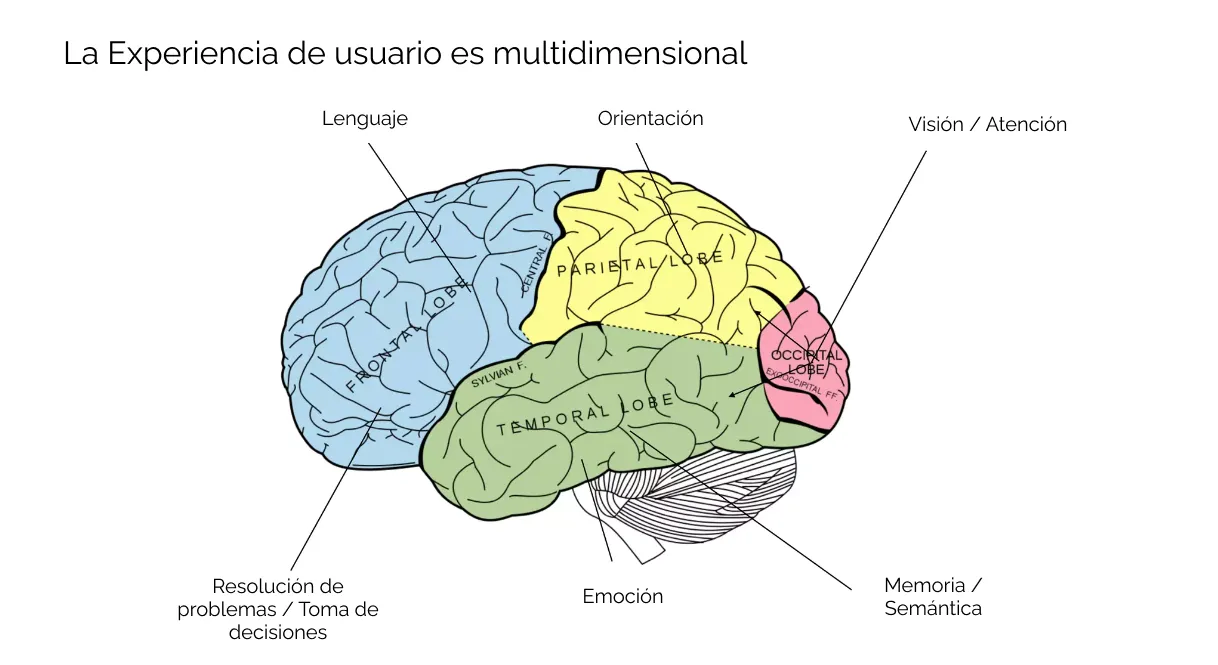
The author describes that a good experience is multidimensional, involving several processes.
The 6 minds would be:
Mind (cognitive process)
Description
Related questions
Vision/Attention
Understands the different processes that occur in the brain during vision and design.
What does the person see, what do they expect to see, what are they not seeing?
Wayfinding
Explores the cognitive process of spatial information and navigation. Considers the challenges of wayfinding in virtual interfaces.
How do they navigate the virtual world (from one screen to another, how do they exit, do what they need to do)? How do they expect it to happen?
Memory
Understands how abstract thinking is based on stereotypes and mental models.
How has the user learned to navigate a site or app? What works, how do they expect it to work? Does it activate any pattern they’re familiar with?
Language
Studies the use of words and users’ experience level for effective communication. Considers translation and local word usage when designing multilingual products.
What language, words do they use to refer to what’s happening (novices and experts for example), and how does that language help us understand their representation of the world? Are you using your customer’s language?
Decision
Accepts differences in decision processes between experts and novices. Helps customers redefine the problem space to understand their real problem.
How can we help the user make a decision? What will the user need next? How can we improve their “micro decisions” through design?
Emotion
Considers emotions when designing products and services. Understands rational and emotional factors that influence decision-making.
What happens to the user with what they see? What worries them in their life, and what can affect how they navigate or use the digital product? What motivates them and what scares them? What do they really want? What deep emotions are being activated?
The 6 minds by stage
Examples for gathering information, systematizing and analyzing
Mind
Gathering
Systematization
Analysis
Vision/Attention
Observe your customers as they interact. What do they pay attention to? Which interface areas capture their focus?
Create heat maps based on the areas that attracted the most attention.
Which design elements are most attractive or distracting to the user. Evaluate if these focus points are the desired ones in the experience you seek to offer.
Wayfinding
Ask customers to navigate an interface or space and observe if they intuitively find what they’re looking for.
Create user flows or “journey maps”. Identify pain points.
Review how current structure and navigation align with user expectations. Identify opportunities to make navigation more intuitive.
Memory
Conduct recall tests with your customers post-interaction. What do they remember and what do they forget?
Categorize information based on ease of recall.
Identify patterns of what users tend to remember and forget. This can indicate which aspects are most memorable and which need to be reinforced.
Language
Conduct interviews and surveys. Pay attention to the language customers use when describing their experiences.
Create a glossary based on customer language.
Study the words and phrases users use frequently. This will provide insights into their perspective and how they conceptualize their experience.
Decision
Research how customers make decisions. What factors do they consider? What information do they need?
Develop profiles or “personas” based on decision processes.
Evaluate factors that influence users’ decisions. Consider differences between novice and expert users in their decision-making processes.
Emotion
Ask customers how they feel at different interaction points. Use qualitative methods.
Create an “emotional journey map”.
Analyze emotions at different experience points. Identify moments that generate frustration, joy, confusion, etc. and look for improvement opportunities.
Closing
Some essential learnings from the book:
From Cognitive Design perspective, user experience transcends mere aesthetics or functionality. It’s essential to understand how people process information and how they interact with their environment to create designs that are intuitive and effective.
Whalen’s proposal to divide human cognition into six “minds” offers a practical framework for approaching design from multiple perspectives. Whether considering visual, emotional, or decision-making aspects.
“Design for How People Think” offers us tools and techniques to improve our work as designers from user-centered research. The author emphasizes the need to research and know our users in a multidimensional way.
Extras
1. Here’s a figjam with the 6 minds for data analysis:
https://www.figma.com/community/file/1289591600287857520
2. Video of the author in a workshop about the book at UXPA Seattle:
3. And here’s a very interesting case study from the 6 minds perspective: https://designfromhuman.medium.com/designing-for-the-six-minds-of-the-user-experience-a-case-study-of-car-dashboard-user-interface-b5c692e93d3e
Thank you for reading 🙂
What did you think of the book? Had you read it?