
Reflection on the article: Continuous training in home visits. Qualitative analysis of reflective meta-supervision (Cerfogli, C; Contreras, P., 2016)
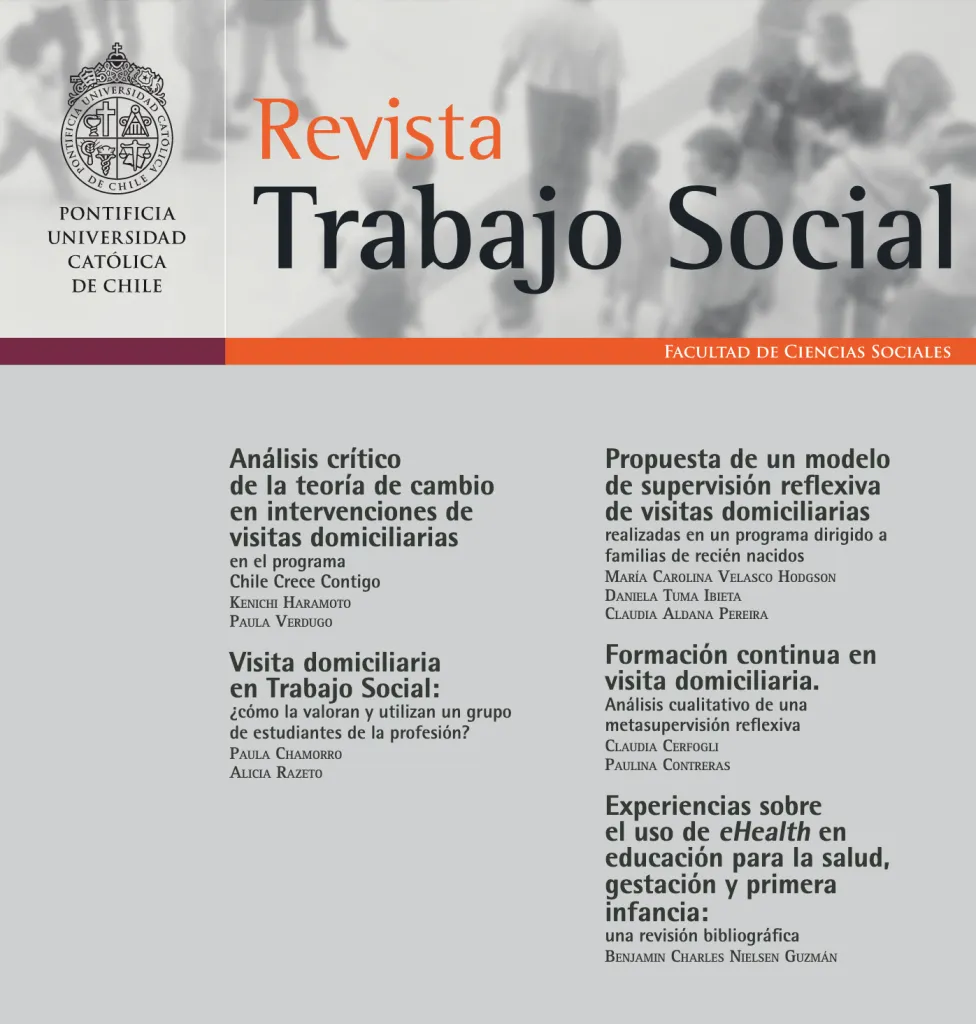
Several years ago, together with the brilliant Claudia Cerfogli, we worked for close to a year (a few hours per week) as part of a larger team led by professor Marcela Aracena, who has studied Home Visits (HV) in Early Childhood for many years. During that year, several teams worked from different perspectives to better understand HVs and how to implement them in the country. In this context, Claudia and I set out to understand the meta-supervision of home visits in early childhood. In the model, non-professional monitors who accompanied pregnant women and new mothers during the first year of the child’s life received support from a psychologist in individual and group sessions where they discussed the difficulties, achievements, and concerns of the monitors regarding those HVs. Subsequently, that psychologist who supported the women monitors was, in turn, supervised (hence meta-supervision) by another psychologist with more experience and training in supervision.
What Claudia and I did was listen to all the recordings of those meta-supervision sessions and analyze them through the lens of Grounded Theory (a qualitative research method that seeks emerging conceptualizations in integrated and categorized patterns in the data), ultimately proposing a model of what happens in that meta-supervision relationship and how it affects the final relationship between the monitor and the family.
I wanted to bring up this publication:
- Because I’m proud of the reflection of a tremendous joint work effort 🙂
- Because although it’s not the only qualitative research I’ve done, it is the only one that has been published.
- Because I like to think that my work experience prior to the UX world makes sense to my current work and can contribute to the teams I work with today.
Some learnings
Reflecting on that publication over the years, from the most general to the particular:
- What we learn in one context doesn’t stay there; it helps us apply it in other worlds (like UX), even if we hadn’t even thought they existed.
- Academic research skills and knowledge can indeed be transferred (with some adjustments) to user research, and that’s fabulous - I feel like I’m living my dream.
- I wish everyone had the opportunity to conduct qualitative research; we would realize that all other forms of user research are an express and raw form of investigation.
- There are many variables to consider to conduct good qualitative research, from data collection, research ethics, data analysis and synthesis, where each stage involves constant questioning and review that sometimes gets lost. It’s important to maintain the balance between being Lean without losing sight of rigor.
- Qualitative research is not THE default research method (although I must confess it’s my favorite). In the article, it was the appropriate research method because of the objectives we set at the beginning and the paradigm from which we understood the supervision process. Other studies might have a quantitative or mixed methods approach.
- Although it’s not the only form of research, when we want to understand a phenomenon in depth from the people who experience it, qualitative research is key.
Thanks for reading this far. If you feel like reading the article that Claudia and I wrote 🙂 here’s the Link to the Article (free access) “Continuous training in home visits. Qualitative analysis of reflective meta-supervision” (Cerfogli, C; Contreras, P., 2016)
Any comments, you can write to me on my LinkedIn profile