Persuasion and Behavioral Psychology in UX: From Cialdini to Responsible Design
As UX professionals, we know that digital interaction is much more than an interface; it’s a complex dance of decisions, emotions, and motivations reflected in choices made on a screen. In this ecosystem, persuasion plays a very important role, whether we’re aware of it or not. But where do we draw the line between influencing and manipulating?
Today I want to explore Robert Cialdini’s influential 6 principles of persuasion, their power in UX design and digital marketing, and examine them through an ethical lens, alongside models that prioritize user autonomy and well-being.
What are Cialdini’s principles?
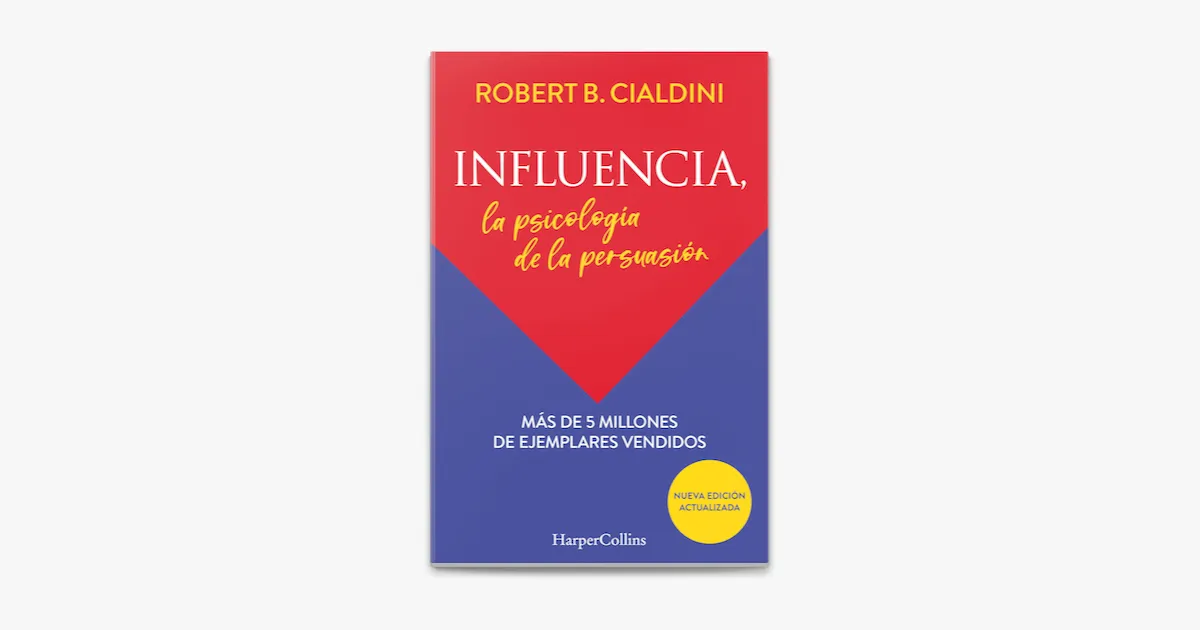
Robert Cialdini originally presented in 1984, in his classic book “Influence: The Psychology of Persuasion”, six universal principles that explain why people tend to say “yes” to certain proposals:
- Reciprocity
From an early age we learn that we should return favors. This principle is based on a universal social norm: if someone gives me something (affection, help, a gift), I feel obligated to return it.
- In psychology: activates the aversion to being seen as unfair or selfish. Reinforced culturally and through social learning.
- Commitment and Consistency
Once we make a decision, we want to remain consistent with it, even if circumstances change.
- In psychology: relates to cognitive dissonance and the need for consistency between what we think, say, and do. Contradicting ourselves makes us uncomfortable, so we stay on the same path.
- Social Proof
When we don’t know what to do, we look at what others are doing. If many people choose something, we assume it must be right.
- In psychology: it’s a social heuristic that reduces uncertainty and increases the feeling of security, especially in ambiguous or new situations.
- Authority
We tend to follow recommendations from figures with recognized status or knowledge (professionals, experts, institutional figures).
- In psychology: we’ve been taught to obey authority since childhood (school, family, medicine). We associate authority with legitimacy and lower risk.
- Liking
We prefer to say yes to those we like, who are similar to us, or who treat us well.
- In psychology: activates empathy, attachment, and social affiliation mechanisms. Appearance, emotional language, and connection increase influence.
- Scarcity
We value more what seems limited or hard to obtain. Scarce things seem more valuable to us.
- In psychology: relates to loss aversion and the desire for control. If something is scarce, we feel urgency to obtain it before it disappears.
These principles are based on internalized social norms and mental heuristics we use to decide quickly in contexts of uncertainty or cognitive overload.
The author writes from the perspective of how these influence methods can be applied to us, and therefore invites the reader to maintain a critical and conscious attitude.
The new principle: Unity as a persuasive bond
In the expanded 2021 edition of Influence, Cialdini introduced a seventh principle: Unity.
Unity refers to the tendency to be more influenced by people with whom we feel a shared identity. It’s not the same as liking: it’s feeling that the other person is part of our “us”.

"Flying Swings" Eileen Soper, 1905-1990. (Public domain)
Application of principles in UX
These principles are widely applied in digital products and user experiences:
- Reciprocity: offering a free trial or valuable resource (as Figma or Canva do) that genuinely improves the initial experience can foster subsequent commitment. In contrast, giving away something irrelevant just to capture an email can feel manipulative.
- Social Proof: showing the number of active users, testimonials, or “the most downloaded course of the month” influences decision-making.
- Scarcity: can be real (“limited spots in a workshop”) or artificial (a fake countdown that generates urgency). The latter is considered a dark pattern.
- Authority: including expert endorsements or certifications can increase trust.
- Liking: using warm characters, personal storytelling, or friendly UX writing generates emotional identification.
How is the Unity principle applied?
- Community design: highlighting belonging to a group (“our community of designers”, “mothers like you”, “therapists for change”) reinforces the unity principle.
- Identity storytelling: sharing lived experiences (“I also started from scratch on Instagram”) generates authentic connection.
- Visualizing the user as an active part: using expressions like “thank you for being part of this community” or showing real faces reinforces belonging.
- Inclusive design: representing diversity in language and images activates the sense of unity and trust.
In psychology, unity touches deep aspects of attachment, social belonging, and group identity. In UX, it’s an invitation to design not just for individuals, but for communities that recognize each other.

"Marbles" Eileen Soper, 1905-1990. (Public domain)
Emotional, ethical, and/or relational cost
These principles are undeniably effective, and used on sites where we work or that we visit as users. The question that accompanies this is: at what emotional, ethical, or relational cost to the user?
In contexts like mental health, education, or sensitive services, these strategies can induce pressure, anxiety, or decisions not aligned with the person’s well-being.
But then how do we use persuasion knowledge without causing harm. How do we apply ethics to persuasion
Ethical design begins with questions that may be difficult but necessary, where our work influences people’s decisions.
Some questions that can guide us:
- Am I facilitating a decision or pushing an action the user didn’t want?
- Does the microcopy convey trust or pressure?
- Am I giving enough context for the user to feel in control?
- Does this interaction respect the user’s autonomy and intention?
The two key principles that Nielsen mentions for more ethical design:
Nielsen argues that while ethical rules in research are clearer, in design we often overlook what it means to use tactics like deception, visual manipulation, or excessive personalization. These actions can raise short-term metrics (like clicks or conversions), but deteriorate trust and brand value in the long term.
According to him, there are two things any UX designer or researcher can do to act more ethically:
1. Be aware. The first step is to recognize that there is an ethical dimension in design. If you ask yourself “is this ethical?” and you’re not sure, it probably isn’t. Just asking the question is already a valid alert.
2. Think long-term. Beyond immediate conversion, consider how the user will feel afterward. Would they return? Would they trust you? Long-term loyalty and business value come from treating users well, not manipulating them.
Key ethical principles
When we apply persuasion principles in UX, we enter delicate territory, as we influence real decisions that affect people’s lives, well-being, and autonomy. Therefore, the use of these resources cannot be ignored, naive, or automatic: it must be guided by ethical principles.
In psychology, medicine, and human-centered design, there are frameworks that help us evaluate whether a practice is ethically sustainable. These principles not only protect the user but also strengthen trust, long-term relationships, and the positive impact of the experience.
Some key ethical principles we can integrate directly into our design decisions:
- Do No Harm: Don’t cause unnecessary emotional or cognitive harm. Translates to avoiding designs that cause anxiety, guilt, frustration, or unwanted outcomes. Reject the use of dark patterns. Beauchamp, T. & Childress, J. (1979). Principles of Biomedical Ethics.
- Transparency: Clarity about intentions, costs, consequences, and benefits. In UX, refers to interfaces that explain what will be done with data, what a click or subscription entails. Floridi, L. et al. (2018). AI4People: An ethical framework for a good AI society.
- Control and agency: The user must feel they retain their decision-making capacity. Involves offering real options, allowing easy unsubscription, avoiding coercion by design. Deci, E., & Ryan, R. (1985). Self-Determination Theory: Intrinsic Motivation and Self-Determination in Human Behavior.
- Measuring ethical impact: Using post-interaction surveys or regret metrics helps detect if the experience was truly positive. For example, through perception surveys, post-interaction regret analysis, follow-up interviews about negative experiences. Sengers, P., Boehner, K., David, S., & Kaye, J. (2005). Reflective Design.
Applying ethical principles like transparency, agency, or care not only implies a stance, a way of thinking, but also a way of acting on them. To put them into practice, it’s useful to add psychological models and design methodologies that allow building products from user autonomy, internal motivation, and respect for their emotional and cultural context. These models don’t oppose Cialdini but complement it.
Models that enrich Cialdini’s perspective
From my psychology background and experience in experience design, I’ve felt curiosity first, and then the need to go beyond persuasion, toward models that not only explain behavior but help us make better decisions at different moments in our work as UX professionals.
Here I’ve chosen three conceptual frameworks that help us broaden and deepen the click-centered view:
- the ethical behavioral approach of Nudge Theory
- the motivational model of Self-Determination Theory (SDT)
- and iterative design methodologies like Design Thinking and Lean UX
These models don’t oppose Cialdini but do add depth when the goal is designing transformative, sustainable, and emotionally safe experiences.
I chose them for their relevance in contexts where design intersects with mental health, education, well-being, or personal decisions (like many of the products we work on for those of us coming from social and human sciences).
Each provides concrete tools for designing with awareness:
- Nudge Theory teaches us to use decision architecture responsibly, to facilitate healthy or informed behaviors without coercion.
- Self-Determination Theory puts internal motivation at the center, reminding us that autonomy, competence, and connection are key to genuine engagement.
- Design Thinking / Lean UX allow integrating the user’s voice at every stage of the process, favoring solutions validated from real experience rather than assumption.
In the following table I summarize their approaches and how they can be applied in UX:
Model
Focus
UX Application
Nudge Theory (Thaler & Sunstein)
Influence decisions through context, without coercion
Information architecture, defaults, transparent design
Self-Determination Theory (Ryan & Deci)
Satisfaction of autonomy, competence, and relatedness
Internal motivation, lasting engagement
Design Thinking / Lean UX
Solve real problems with user participation
Iteration, continuous testing, conscious co-creation
“The most effective influence is one that preserves autonomy.” — Deci & Ryan
"S" Eileen Soper, 1905-1990. (Public domain)
Designing with respect and awareness
Cialdini’s principles are incredibly useful and continue helping us understand human behavior even 40 years after publication. However, in an increasingly complex digital world, very different from the context at the time of its original publication, and with increasingly conscious users, our responsibility as UX and design professionals expands.
It’s not just about blindly applying strategies that can improve certain short-term metrics, but about integrating persuasion alongside ethical considerations and empathetic understanding of users and their contexts, betting on long-term trust relationships and brand value.
We don’t design to coerce, but to open new possibilities. To accompany our users’ decisions with maximum respect for their autonomy and well-being.
Resources for deeper learning
- Influence — Robert Cialdini (1984, Harper Business)
- Influence: New and Expanded — Robert Cialdini (2021)
- Nudge: Improving Decisions About Health, Wealth, and Happiness — Richard H. Thaler & Cass R. Sunstein (2008)
- Self-Determination Theory: Basic Psychological Needs in Motivation, Development, and Wellness — Richard M. Ryan & Edward L. Deci (2017)
- Designing for Behavior Change: Applying Psychology and Behavioral Economics — Stephen Wendel (2013)
- NNgroup: Persuasive Design
- NNgroup: Design Ethics