Design for How People Think: The 6 Minds of User Experience
📑 View contents
TL;DR: John Whalen’s “Design for How People Think” proposes that user experience emerges from 6 cognitive processes: Vision, Wayfinding, Memory, Language, Decision, and Emotion. In this article, I dive into how to apply this framework in UX research, how to connect it with Nielsen’s heuristics and cognitive load, and share practical resources for implementation.
📑 Table of Contents
- Introduction: Why this book changed how I research
- The 6 Minds: Whalen’s Cognitive Model
- Practical Application: From Theory to Research
- Connection with Other Frameworks
- Tools and Resources
- Final Reflections
- References
1. Introduction: Why this book changed how I research
When I first read “Design for How People Think” by John Whalen, a cognitive psychologist and UX expert, I felt that someone finally put into words what I had intuited since my psychology training: user experience doesn’t happen on the screen, it happens in the user’s mind. And that changes everything.
The book reached me at a time when I had been doing qualitative research for years, but I lacked a theoretical framework that connected cognitive psychology with design in a practical way. It’s not that Nielsen or heuristic principles aren’t useful (in fact, I use them constantly), but Whalen proposes something different: instead of evaluating the interface, understand what happens inside the user’s head.
“A good experience is multidimensional, where several cognitive processes would be involved simultaneously.” — John Whalen
And why did I find it so relevant for the Latin American context? Because we often work with users who have very different contexts from those in Silicon Valley research. Understanding universal cognitive processes gives us a common language that transcends cultural differences, while allowing us to adapt questions to the local context :)
2. The 6 Minds: Whalen’s Cognitive Model
Whalen proposes that user experience emerges from the interaction of six main cognitive processes. They aren’t the only ones (the brain is complex, obviously xD), but they are the most relevant for design. What I like about this model is its descriptive approach: instead of pointing out errors like heuristics do, it helps us understand the mental processes that occur during interaction.
2.1 The 6 Minds in detail
| Mind | Description | Key Research Questions |
|---|---|---|
| 👁 Vision/Attention | Visual perception processes and attention capture. Although it seems like the most obvious area of design, attention can be easily distracted. | What does the person see? What do they expect to see? What aren’t they seeing that they should? |
| 🧭 Wayfinding | Spatial navigation and construction of mental models of space. Especially complex in virtual interfaces and VR/AR. | How do they navigate? Do they know where they are? Can they go back? How do they expect it to work? |
| 🧠 Memory/Semantics | Mental schemes, expectations based on previous experiences. Users arrive with “baggage” from Amazon, Google, etc. | What patterns does this activate? What are they familiar with? What do they expect to happen? |
| 💬 Language | Use of words, terminology, level of expertise. Companies tend to “overshare” jargon that generates cognitive friction. | What words does the user use? Do they understand the jargon? Are you speaking their language? |
| ⚖️ Decision | Decision-making processes, different between experts and novices. The designer’s role is to simplify micro-decisions. | What do they need to decide? What information is missing? How can we facilitate micro-decisions? |
| ❤️ Emotion | Emotional states, fears, deep motivations. Users bring “emotional baggage” that influences their decisions. | What worries them? What motivates them? What fears do they have? What do they really desire? |
2.2 Decision as a result of the other 5 minds
A key insight Whalen presents is how Decision emerges when the other five minds function correctly, acting as the final output of the entire cognitive system. If the user cannot see something (Vision), doesn’t know where they are (Wayfinding), doesn’t understand the language (Language), cannot remember how it works (Memory), or is emotionally blocked (Emotion)… they simply won’t be able to make a good decision.
This changes how we approach research: when we detect a “conversion” or “abandonment” problem, it’s not enough to ask “what happened?”. We can trace exactly which of the 6 minds failed:
- Did the user not see the button? → Vision
- Did they getting lost in navigation? → Wayfinding
- Did they not understand what “checkout” meant? → Language
- Did they not know what to expect because it was different from other sites? → Memory
- Were they afraid to enter their card? → Emotion
2.3 The 6 Minds and Cognitive Load
The concept of cognitive load (the amount of “mental energy” a task requires) is key to understanding when the 6 minds collapse. When the load is excessive, the brain simply gives up.
Cognitive load can be objectively measured through biometrics like pupil dilation: larger pupils = greater use of cognitive resources.
This explains why long forms, confusing navigation, or dense texts generate abandonment. It’s not that the user “doesn’t want” to complete the process, it’s that their brain cannot process so much information simultaneously.
3. Practical Application: From Theory to Research
Okay, theory is fine, but how do we put it into practice? Here I share how I’ve been incorporating this framework into my research work in Chile and Latin America.
3.1 In Data Collection (Interviews)
When I design interview scripts, I now structure questions that explore each of the 6 minds. Not necessarily explicitly, but I ensure I cover all dimensions:
Examples of questions for each mind:
- → Vision: “Tell me what was the first thing you saw when you entered the site”
- → Wayfinding: “How did you know where to click? Did you feel lost at any moment?”
- → Memory: “Does this remind you of any other site or app you’ve used?”
- → Language: “Was there any word or term you didn’t understand?”
- → Emotion: “How did you feel when you saw the price / the form / the error message?”
- → Decision: “What information did you need to decide? What was missing?”
(If you want to dive deeper into how to design interviews, I recommend checking out the UX Methodology Selector we have on the site)
3.2 In Systematization (Analysis)
When analyzing data, the 6 minds function as coding categories. This has helped me a lot to organize findings and communicate them more clearly to design teams.
| Mind | Collection | Systematization | Analysis |
|---|---|---|---|
| Vision | Observe what they look at, eye tracking, heat maps | Map attention areas vs. ignored areas | Are the focus points the desired ones? |
| Wayfinding | Ask them to navigate and observe if they get lost | Create user flows, journey maps | Does the structure align with expectations? |
| Memory | Post-interaction recall tests | Categorize by ease of recall | What is remembered vs. what is forgotten? |
| Language | Pay attention to the vocabulary they use | Create user-based glossary | What words do they use frequently? |
| Decision | Investigate how they make decisions | Develop profiles by decision process | What factors influence? Experts vs. novices? |
| Emotion | Ask how they feel at each point | Create emotional journey map | Identify moments of frustration/joy |
3.3 Communicating findings
One of the advantages of using this framework is that it facilitates communication with stakeholders. Instead of presenting a long list of problems, I can group them by type of affected cognitive process:
“We identified that users have problems mainly in the Language mind (they don’t understand technical terminology) and Emotion (they feel distrust when entering payment data)”
This makes recommendations more actionable and allows the design team to prioritize better.
4. Connection with Other Frameworks
One of the things I like most about Whalen’s model is that it complements other frameworks we already use, it doesn’t replace them.
4.1 The 6 Minds + Nielsen Heuristics
Nielsen’s heuristics (which turn 31 years old in 2025 and remain valid) tell us what to evaluate. The 6 minds help us understand why it fails.
| Nielsen Heuristic | Related Mind(s) |
|---|---|
| Visibility of system status | Vision/Attention, Wayfinding |
| Match between system and the real world | Memory (schemes), Language |
| User control and freedom | Wayfinding, Decision |
| Consistency and standards | Memory (learned patterns) |
| Error prevention | Decision, Cognitive load |
| Recognition rather than recall | Memory, Vision |
| Flexibility and efficiency of use | Decision (experts vs novices) |
| Aesthetic and minimalist design | Vision, Cognitive load |
| Help users recognize, diagnose, and recover from errors | Emotion, Wayfinding |
| Help and documentation | Language, Memory |
(If you are interested in diving deeper into heuristic evaluation, I have a complete guide to UX/CX heuristics that includes the most relevant frameworks for 2025)
4.2 The 6 Minds as “Cognitive Gates” (C-Gates)
In a working document I put together integrating several frameworks, I propose thinking of the 6 minds as “Cognitive Gates” (C-Gates).
If the B=MAP model (Behavior = Motivation × Ability × Prompt) describes the necessary external conditions for a behavior, the C-Gates describe the internal filtering process.
For example: a high motivation prompt (M) will fail if design complexity increases cognitive load to the point of overloading the Wayfinding or Memory gates, effectively lowering perceived Ability (A).
[External Prompt] → [C-Gate: Vision] → [C-Gate: Wayfinding] → [C-Gate: Memory]
                  → [C-Gate: Language] → [C-Gate: Emotion] → [DECISION]
If any gate is blocked, the decision does not happen (or happens poorly).
4.3 Ethical considerations: The limit of persuasive design
A point Whalen mentions and that I find fundamental: understanding how the user thinks gives us power, and with that power comes responsibility. Ethical design must avoid coercion and deception.
The “Golden Rule” of persuasive design: never use coercion or deception to influence attitudes or behaviors.
Reducing cognitive load is fine. Manipulating the user to make decisions that don’t suit them is not.
5. Tools and Resources
5.1 Free Resources
- 📋 FigJam with the 6 Minds: Template for data analysis
- 🎬 Author’s Video: John Whalen’s Workshop at UXPA Seattle (search YouTube for “John Whalen Six Minds”)
- 📖 Applied Case Study: Car dashboard from the 6 minds
5.2 Related Articles on UXR.CL
- 📚 How to Learn UX Research for Free in 2026 — Updated guide with resources and communities
- 🔧 UX Methodology Selector — Interactive tool to choose the right method
- 🧮 Quantitative Sample Calculator — For sizing quantitative studies
- 📊 User Journey Map: UX Methodology — How to map the complete experience
5.3 Complementary Books
If you liked “Design for How People Think”, these books complement the cognitive approach very well:
- “Designing with the Mind in Mind” — Jeff Johnson (more technical on perception and cognition)
- “100 Things Every Designer Needs to Know About People” — Susan Weinschenk
- “Laws of UX” — Jon Yablonski (psychological laws applied to design)
- “Don’t Make Me Think” — Steve Krug (the classic on usability)
6. Final Reflections
“Design for How People Think” is not a book to be read once and put away. It is rather a new lens to look at design problems. Every time I return to it, I find something new to apply.
What I value most is that it comes from cognitive psychology, not marketing or growth hacking. Whalen is not trying to manipulate users, but to understand them. And that, for me, is the fundamental difference between ethical design and extractive design.
For those working in UX Research in Latin America, this framework gives us a technical language we can use with development teams and stakeholders, while maintaining the qualitative depth that characterizes good research.
“Cognitive design understands that experience transcends aesthetics or functionality. Understanding how people process information and how they interact with their environment allows us to reduce cognitive friction and improve completion rates in designs.”
Thanks for reading 🙂
Did you already know the 6 minds model? Have you applied it in your work? I’d love to hear about your experience. Connect with me on LinkedIn and let’s chat.
References
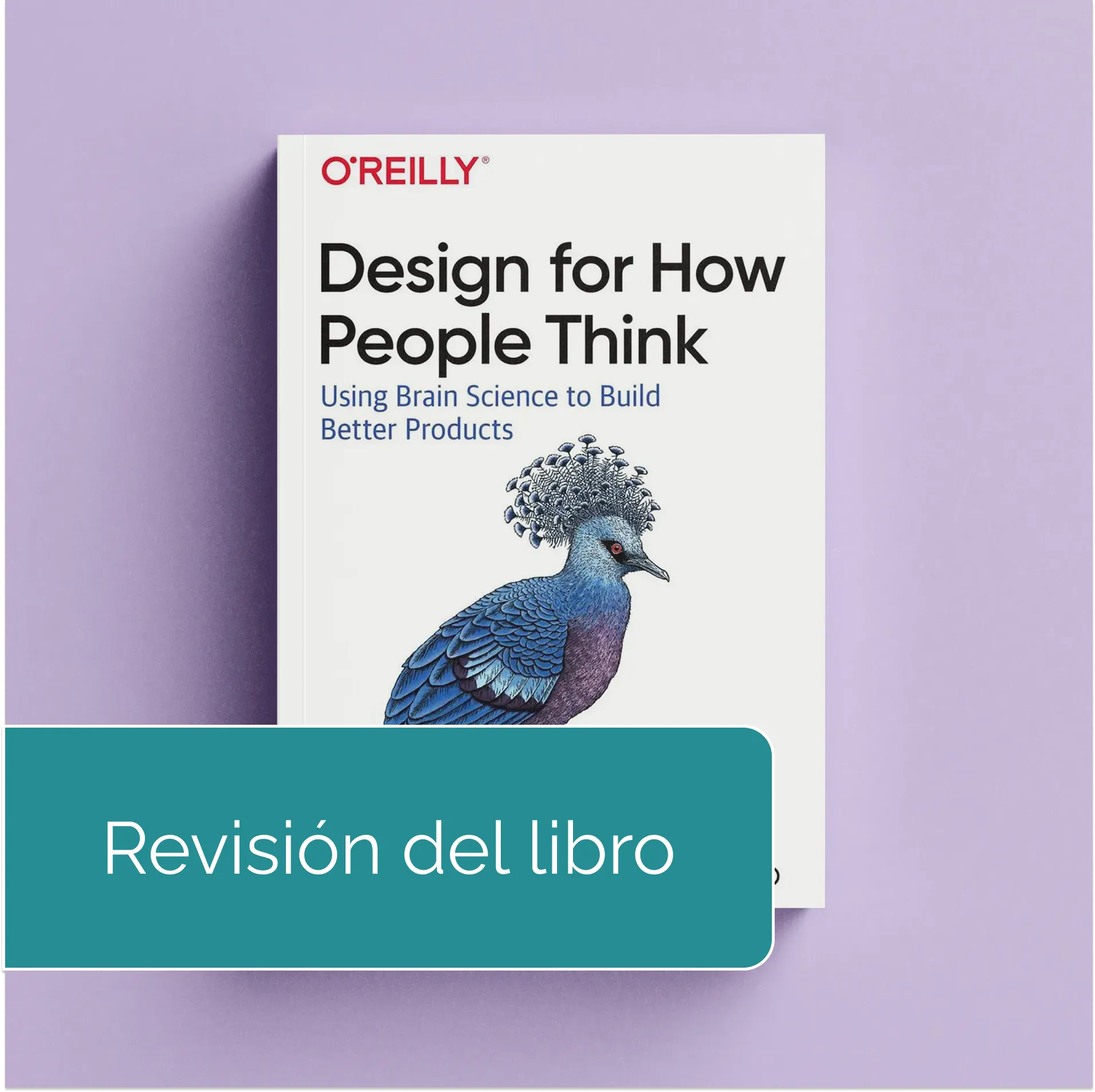
- Whalen, J. (2019). Design for How People Think: Using Brain Science to Build Better Products. O’Reilly Media.
- Nielsen, J. (1994). 10 Usability Heuristics for User Interface Design. Nielsen Norman Group.
- Sweller, J. (1988). Cognitive load during problem solving: Effects on learning. Cognitive Science, 12(2), 257-285.
- Fogg, B. J. (2009). A behavior model for persuasive design. Proceedings of the 4th International Conference on Persuasive Technology.
- The Six Minds of UX Design. (2019). Adobe Blog. https://blog.adobe.com
Original article published in September 2023. Updated in January 2026 with new sections on practical application, connection with frameworks, and additional resources.