Malpo Case Study: Research + Web Redesign for Real Estate Lead Capture
Context and Challenge
Malpo, an established real estate company, faced a critical challenge: their website failed to generate qualified leads or build trust in their real estate projects.
Problems identified in initial audit:
- Complex information architecture creating navigation friction
- Inconsistent mobile experience limiting access from primary devices
- Unclear information hierarchy diluting strategic CTAs (call-to-action)
- Misalignment between value proposition and interface communication
- Missing behavioral data to guide design decisions
Research Methodology
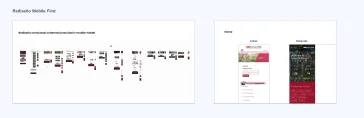
Phase 1: Diagnostic Analysis
Heuristic Evaluation
Usability audit applying Nielsen's 10 heuristics, identifying critical violations:
- System status visibility (active projects/availability)
- User control and freedom (spatial orientation gaps)
- Error prevention (forms lacking clear validation)
Analytics Analysis
Historical data review identifying:
- Conversion funnel abandonment points
- Mobile vs desktop user behavior patterns
- High bounce rate pages
- Current navigation patterns
Competitive Benchmarking
Analysis of 5 competing real estate companies identifying:
- Industry standards for architecture and navigation
- Project communication differentiators
- Contact and quotation experience trends
- Innovation opportunities
Phase 2: Synthesis and Mapping
- Visual documentation of current hierarchical structure
- Critical user flows and friction points
- Business-driven reorganization proposal
- Stakeholder validation of proposed changes
Solution and Deliverables
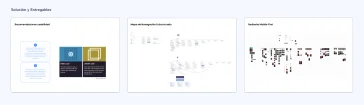
Deliverable 1: Research and Information Architecture
Structured Navigation Map:
- Clear 2-3 level hierarchy reducing friction
- Audience segmentation: buyers, investors, internal stakeholders
- Optimized flows: project search → contact → quotation
Findings Document:
- Method-based synthesis (heuristic, analytics, benchmark)
- Issues prioritized by conversion impact
- Research-driven recommendations
Deliverable 2: Mobile-First Redesign
Design Approach:
- Mobile as primary experience (65%+ traffic)
- Omnichannel coherence across desktop-mobile-tablet
- Simplified flows preserving critical information
Key Redesigned Components:
- Main Landing: Clear value proposition, rapid project access, prominent CTA
- Project Catalog: Smart filters, hierarchical visualization, information-rich cards
- Project Details: Immersive gallery, structured content, contextual CTAs, interactive maps
- Forms: Essential fields only, real-time validation, clear confirmation
- Post-Contact: Next steps, response times, alternative contact channels
Results and Impact
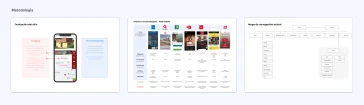
Validated Architecture
- Navigation aligned with real estate industry standards
- Scalable structure supporting future catalog growth
- Clear documentation for internal teams and developers
Enhanced Brand Perception
- Modern, clean design conveying professionalism
- Consistent experience reinforcing reliability
- Improved accessibility expanding potential audience
Optimized User Clarity
- Fewer steps to access critical information
- Clear visual hierarchy eliminating unnecessary decisions
- Simplified conversion flows increasing contact intention
Actionable Implementation Roadmap
- Phase 1 (Priority): Mobile redesign + homepage + project listings
- Phase 2 (Short-term): Optimized forms + CRM integration
- Phase 3 (Medium-term): Advanced analytics + A/B testing
Success Metrics:
- Conversion rate (visit → contact)
- Average time on project before contact
- Mobile bounce rate reduction
- Post-contact user satisfaction (NPS)
Process and Learnings
Applied Methodology
- Quantitative: Site analytics, competitive benchmarking
- Expert: Heuristic audit, architecture analysis
- Collaborative: Iterative stakeholder validation
Challenges Solved
- Information vs simplicity: Structured by detail levels
- Multiple audiences, one interface: Clear intention-based paths
- Conversion without friction: Contextual CTAs aligned with natural flow
Post-Project Recommendations
- Advanced analytics for continuous monitoring
- Periodic usability testing with fresh users
- Post-launch mobile behavior analysis
- Data-driven conversion iterations
"Paulina provided comprehensive guidance throughout the entire process, from deep analysis of our current situation to concrete improvement proposals. What we especially appreciated was that she considered both business objectives and actual user experience. Her follow-up was essential for validating and refining details before implementation. Working with UXR was definitely a great contribution to our company."
Other Case Studies
Sodimac Case Study
Psychology-led User Personas driving internal alignment and strategic initiative prioritization.
View case →Mudango Case Study: Warehouse Experience Research
Multi-country mixed-methods research identifying critical gaps in digital and service experience.
View case →Scaling Organic Traffic from 0 to 40%
Technical and international SEO strategy for Cornershop by Uber, transforming organic search from negligible to primary acquisition channel.
View case →Web Redesign Without Losing Rankings: Oficina Virtual Case Study
Oficina Virtual migrated their site with a backend change without losing sales or Google rankings. How integrated UX research and SEO protected their digital investment.
View case →UX Discovery for B2B Mobility Platform
Discovery research with Car Dealers that prioritized 5 MVP features from 15 ideas and 7 user pain points. UXR SpA case study.
View case →